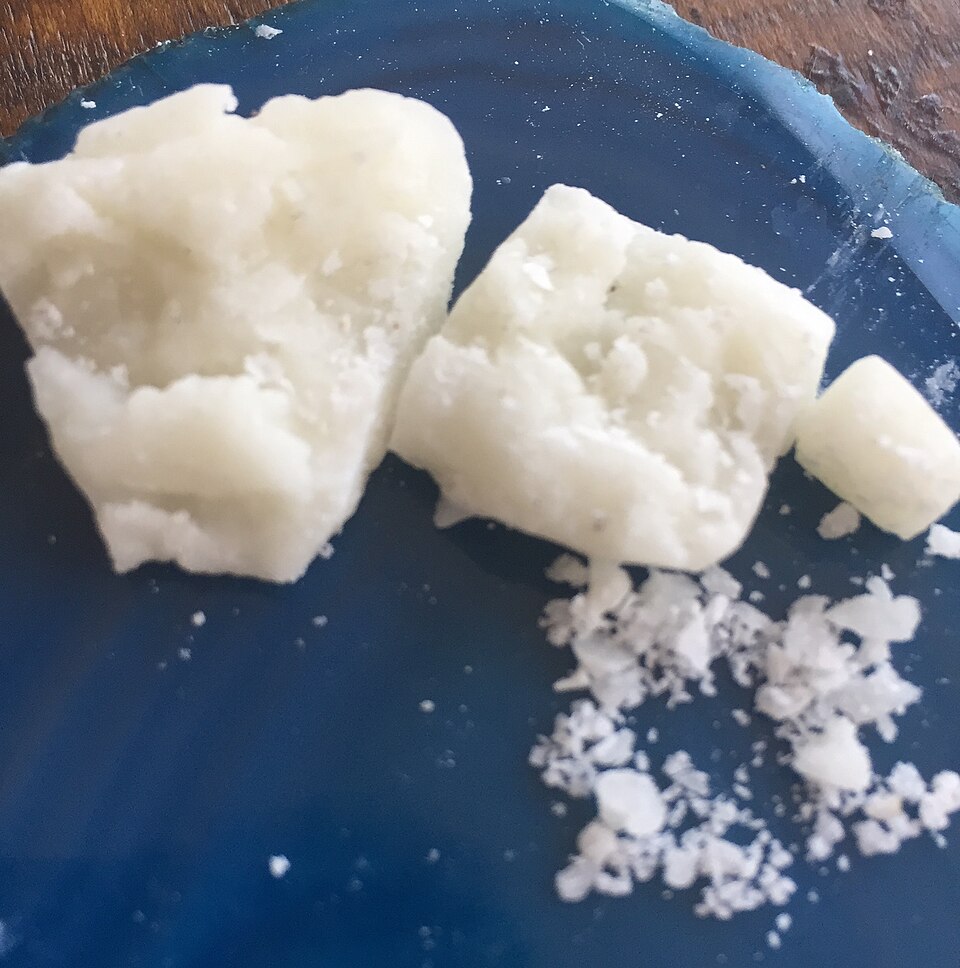
Crack cocaine sample, as identified by the photographer; not a medical cocaine hydrochloride product.
Argv0 · CC BY-SA 4.0
About Cocaine
Cocaine is a stimulant with limited medical applications and substantial poisoning and dependence risks outside supervised medical use.
Also searched as: Coke · Crack
Available strengths
Strength is the amount in a tablet, capsule, liquid or patch. Different formulations are listed separately.
| Product & formulation | Strengths |
|---|---|
| Goprelto (cocaine hydrochloride) Prescription nasal solution | 40 mg/mL (4%) For topical nasal anesthesia during clinical procedures. This is not a recreational preparation. Product label · Checked 2026-10-31 |
Buy Cocaine: pricing & legal access
Cocaine online: availability & product information
Cocaine is federally listed in Schedule II, which does not mean ordinary consumer retail access. DrugRX has no verified consumer pharmacy quote and does not provide seller referrals.
Pricing status: No live price feed or verified quote. DrugRX does not sell or dispense products.
Sources: DEA — Controlled substances alphabetical list (October 2026)
Cocaine information
Cocaine and crack
Crack refers to a base form of cocaine, not a separate active drug. Pharmaceutical and illicit products must be distinguished.
Sources: DEA — Cocaine
Health risks
Increased heart rate and blood pressure, agitation and paranoia can occur. Heart attack, stroke and seizures are serious emergencies. Dependence can develop.
Sources: DEA — Cocaine
Medical context
A medical preparation used by a clinician does not establish a safe recreational dose. This reference provides no instructions for illicit products.
Sources: DEA — Cocaine
U.S. federal classification
Listed federally in Schedule II. Classification does not by itself establish that a particular product is approved or that an online transaction is lawful. State requirements and product-specific rules also apply.
Sources: DEA — Controlled substances alphabetical list (October 2026)
Stimulant and anesthetic actions
Cocaine has stimulant effects as well as local anesthetic properties. A medicine used in a controlled procedure and an illicit product are different clinical and quality-control contexts.
Sources: DEA — Cocaine
Cocaine and crack
Crack describes a base form of cocaine. It does not identify an additional active drug, and it does not establish purity. Powder and base preparations can also differ in contaminants and other substances present.
Sources: DEA — Cocaine
Cardiovascular and neurological effects
Cardiac rhythm disturbances, myocardial infarction, stroke and seizures are important cocaine-related emergencies. Someone can have a serious reaction without having a long prior history of use. Clinical assessment must consider the actual symptoms and possible co-exposures.
Sources: DEA — Cocaine
Dependence and patterns of use
Repeated stimulant use can become compulsive. Sleep disruption, mood changes and impaired functioning may occur around ongoing use and cessation. A clinical evaluation considers these patterns rather than relying on whether a product was described as powder or crack.
Sources: DEA — Cocaine
Sources and editorial notes
Prepared by DrugRX using the references linked below. Sources were consulted on 2026-10-31. This page has not been independently reviewed by a clinician. Research findings, medication approval and legal permission are separate questions.
- DEA — Cocaine
- DEA — Controlled substances alphabetical list (October 2026)
- DailyMed — Goprelto product label
Legal information is a dated U.S. reference. Product rules and local laws may change. Where the evidence does not establish a dose, interaction profile or price, the page states that limitation.